UMass Lowell / 2026
Piezoelectric neural-interface insertion
Experimental characterization, force sensing and microscale insertion testing.
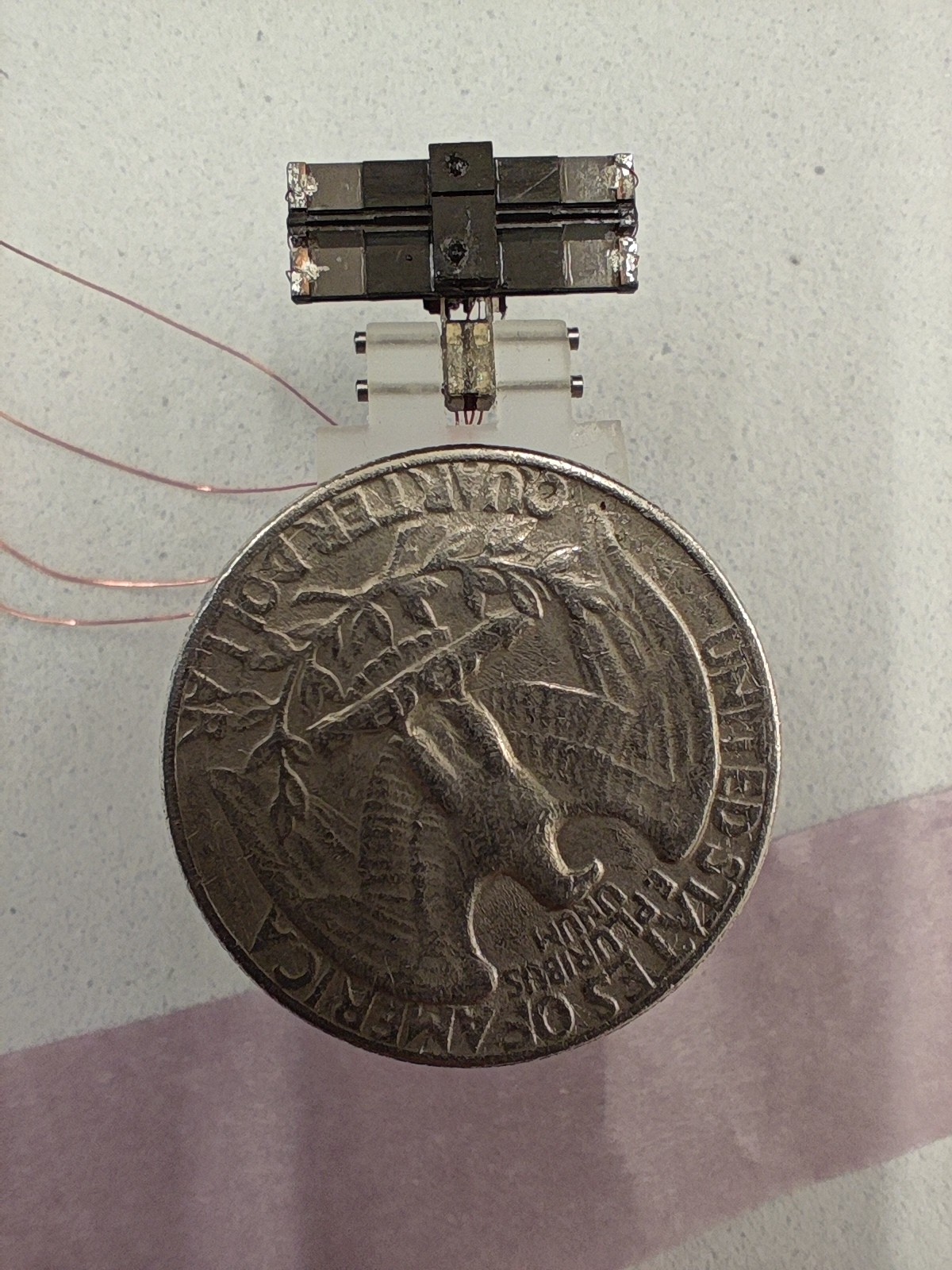
This collaborative study investigates a miniature piezoelectric device for inserting flexible neural electrodes. The conference paper reports benchtop insertion tests with microwires and silicon probes in multilayer brain-mimicking phantoms.
Experimental scope
Benchtop experiments include free-displacement and blocked-force measurements, step-size and frequency characterization, and insertion of microwires and silicon probes into multilayer tissue phantoms. Video tracking and force-sensor measurements characterize device performance, supported by MATLAB tools for acquisition, processing and visualization.
Force-measurement setup
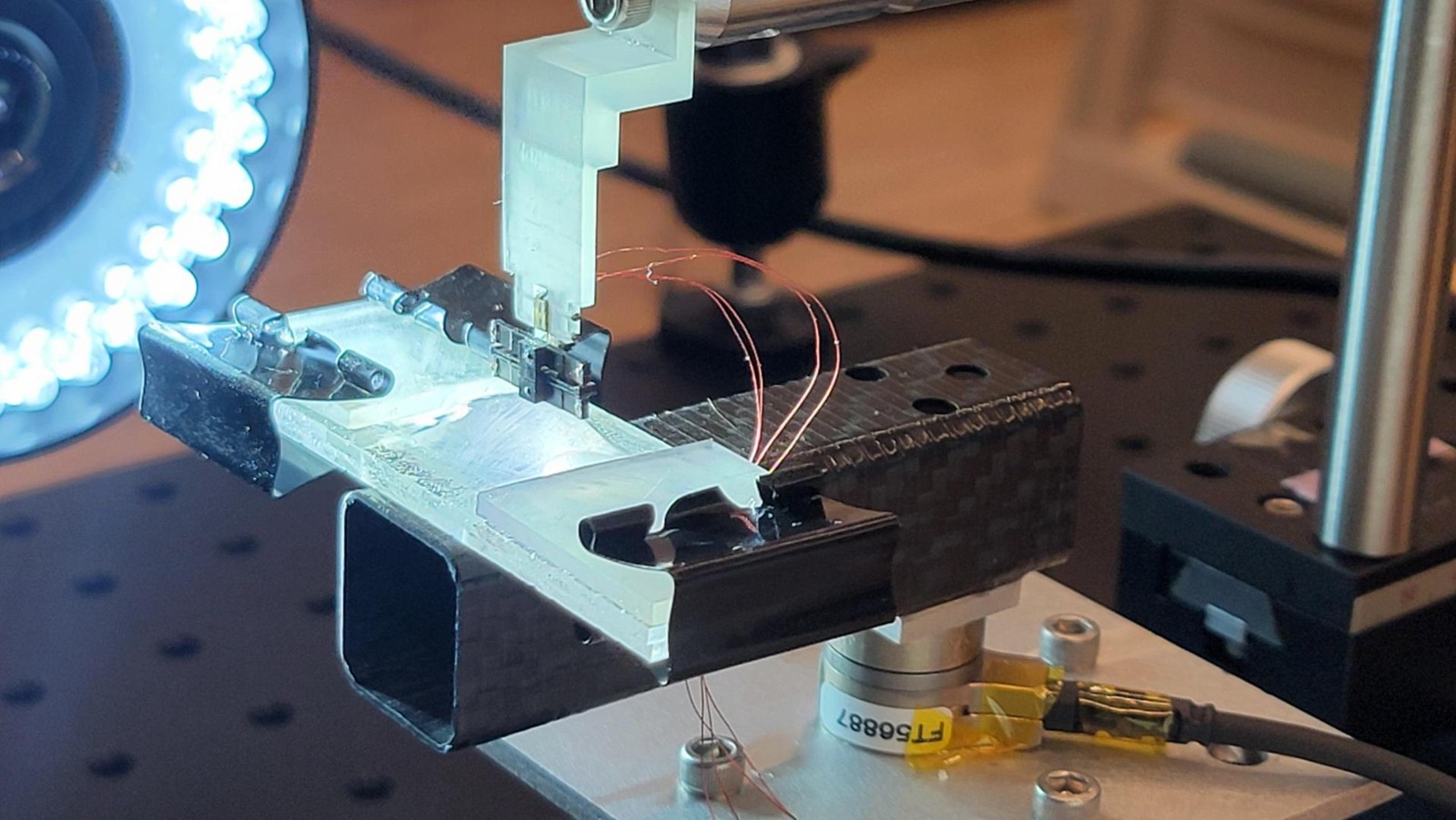
The platform brings together microscope imaging, actuator control and force sensing. A cantilever converts insertion forces into measured bending moments to reduce the influence of environmental disturbances.
Actuator characterization
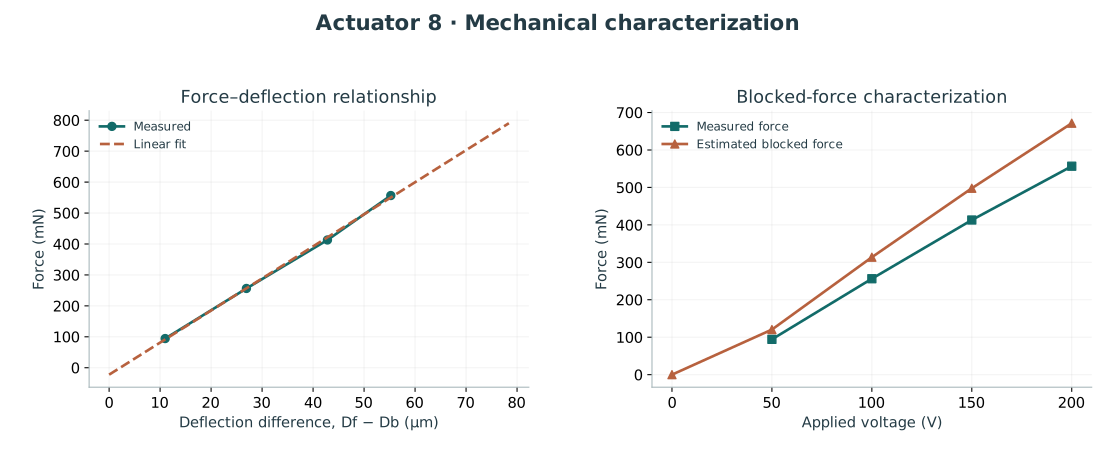
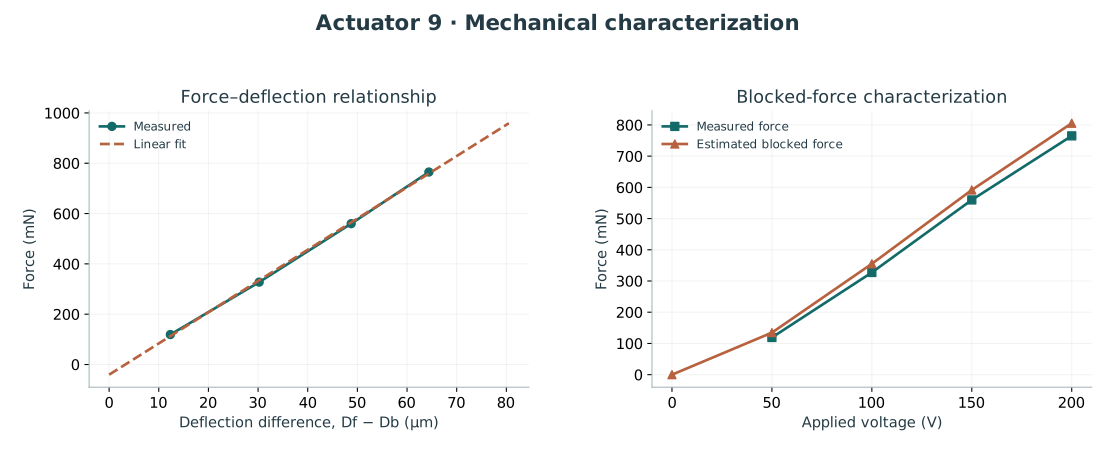
Force–deflection measurements and voltage-dependent force output for two actuators. The estimated blocked force accounts for displacement during force measurement; it is shown separately from the measured force.
Related publication
Lat, K., Chen, X., Jafferis, N., & Chen, L. (2026). Development and Investigation of a Piezoelectric Inchworm Robot for Neural Interface Implantations. ASME MSEC2026-177108.
Paper PDF ↗Reported experimental conditions and device performance
The conference paper reports an assembled size of 14 × 5.8 × 3.6 mm and a mass of 250 mg. Actuator free motion reached approximately 80 µm at 250 V. Insertion experiments used drive voltages no greater than 200 V, with a consistent feed increment of approximately 67 µm per cycle at 200 V.
Characterization of nine actuators yielded estimated blocked forces up to approximately 950 mN at 250 V. This estimate accounts for residual displacement during force measurement and is distinct from actual probe-gripping or insertion force. The Actuator 8 and 9 plots above retain measured and estimated forces alongside force–deflection fits.
Free displacement was measured through microscope imaging and video tracking. Force measurements used an ATI Nano17 sensor; a carbon-fiber cantilever converted axial insertion loads into bending moments, which were converted to forces using the moment arm. Moments were sampled at 1000 Hz on an optical-board setup with vibration-isolating feet.
Insertion experiments and principal results
Bare 25 µm tungsten microwires were tested at 0.5, 1, 2, 5, 10, 15, 25, 50, 75, 100, 150 and 200 Hz, with at least three trials per frequency. Insertion sites were separated by at least 0.5 mm, and recording continued until at least 1 mm of tip penetration into the phantom.
For this 25 µm wire and multilayer-phantom combination, the paper reports a rupture force of 10.96 mN at 0.5 Hz and a minimum of 3.27 mN at 75 Hz. The latter corresponds to a nominal feed speed of 5.025 mm/s, calculated from 67 µm per cycle rather than independently measured instantaneous motion. Rupture force and dimpling increased again at higher frequencies; faster cycling did not consistently improve insertion.
At 75 Hz, 12 µm tungsten wires and 15 µm-thick single-, dual- and quad-shank silicon probes penetrated the phantom membrane layers without buckling. These are benchtop phantom results, not direct demonstrations of performance in living tissue. The 75 Hz condition should not be interpreted as a universal optimum for every probe.
Experimental development and research roles
Xiaowen Chen performed actuator free-displacement and blocked-force measurements, cycle-displacement and step-size characterization, and developed and tested the cantilever measurement structure, experimental platform and acquisition protocol under Noah T. Jafferis’s guidance. Device-speed analyses used video data from these experiments.
MATLAB tools for video displacement tracking, force-data extraction, actuator analysis and plotting were written by Xiaowen Chen. The control GUI extended Noah T. Jafferis’s original implementation, refining voltage transitions to reduce abrupt changes. Early preparation and testing of the three silicon-probe configurations, microwire insertion experiments and subsequent experimental training were also undertaken by Xiaowen Chen.
Later insertion experiments were conducted separately by Xiaowen Chen and Kevin Lat. Initial moment-to-force conversion and filtering were handled by Xiaowen Chen; later data compilation, rupture-point identification and dimpling-depth analysis were handled by Kevin Lat. Reported device outcomes represent the collaborative study.